Visa Acquirer Monitoring Program: Stay Under Visa's Radar
Learn how the Visa Acquirer Monitoring Program (VAMP) works in 2026, why subscription merchants face higher risk, and how to prevent chargebacks before penalties apply.
A nutraceutical subscription merchant was processing $3M monthly. Chargebacks sat at 1.6%. Uncomfortable, but manageable under the old rules.
Then Visa launched VAMP.
That 1.6% now counts fraud reports AND chargebacks together. Their real ratio? 2.4%. They received an advisory notice within 60 days.
The Visa Acquirer Monitoring Program changed how Visa measures risk. If you run a subscription business, the math that kept you safe no longer applies.
For the current numbers in full detail, see our VAMP thresholds guide, which tracks every line as Visa updates it.
This guide explains what shifted, why subscription merchants face the highest exposure, and exactly how to stay under Visa's radar.
What Is the Visa Acquirer Monitoring Program?
VAMP is Visa's unified compliance system. It replaced five separate monitoring programs with one.
It replaced multiple legacy systems with a single program.
Previously:
- Chargebacks were tracked under the Visa Dispute Monitoring Program
- Fraud was tracked under the Visa Fraud Monitoring Program
Under the Visa VAMP Program, both now feed into one combined ratio.
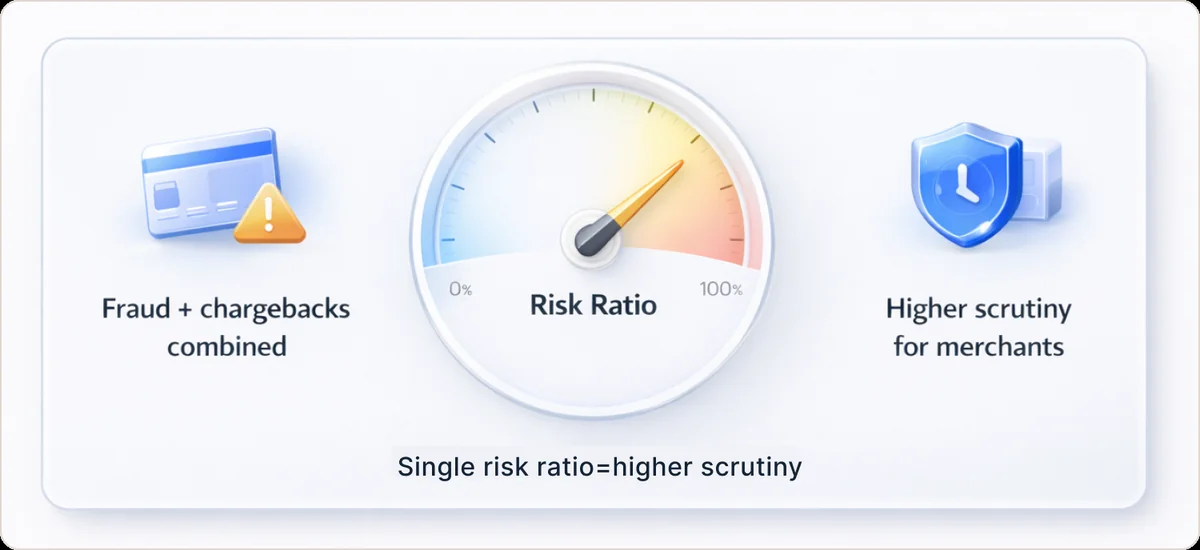
Here's what matters: Visa now measures fraud reports and chargebacks as one ratio.
If a customer disputes a charge and their bank flags it as fraud, it counts twice. Once as a dispute. Once as a fraud. Both hit your VAMP ratio. This "double-counting" is why merchants who felt safe at 1.2% chargebacks are suddenly in violation.
Visa created VAMP because dispute volumes kept climbing. Consumer disputes with U.S. issuers reached $11 billion in 2022, up from $7.2 billion in 2019.
E-commerce chargeback rates rose 222% year-over-year from Q1 2023 to Q1 2024.
The old programs couldn't contain the surge. VAMP is Visa's response.
Why Subscription Merchants Face the Highest Risk
Recurring billing creates recurring risk. Customers forget they signed up. They see a charge they don't recognize. They call their bank instead of you.
Free trials convert to paid subscriptions. Customers who meant to cancel file chargebacks instead. 72% of cardholders don't understand the difference between requesting a refund and filing a dispute. Under VAMP, that misunderstanding directly hurts your compliance standing.
The standard chargeback rate for e-commerce sits around 0.6% to 1%. High-risk subscription businesses, such as nutraceuticals, supplements, and digital memberships, often exceed that before counting fraud.
Under the Visa Acquirer Monitoring Program, exceeding thresholds triggers fees fast. There's no grace period once enforcement begins. And every chargeback now costs approximately $169 when you factor in fees, operational time, and lost merchandise.
How VAMP Works
Visa pulls data from every acquirer monthly. They calculate a simple ratio.
The VAMP Ratio Formula
VAMP Ratio = (Fraud Cases + Chargebacks) ÷ Total Card-Not-Present Transactions
Only card-not-present transactions count. That means online and phone orders. In-store swipes don't factor in.
Visa requires at least 1,500 transactions monthly for evaluation. Small merchants fall outside the scope—but your acquirer may still enforce their own limits.
VAMP Threshold Table
| Category | Oct 2025 launch | Current (since 1 April 2026) |
|---|---|---|
| Merchant Excessive | ≥2.2% | ≥1.5% (CEMEA stays 2.2%) |
| Acquirer Excessive | 0.7% | 0.7% (unchanged) |
| Acquirer Above Standard | 0.5% | 0.5% (unchanged) |
Your acquirer's thresholds matter as much as yours. Their Above Standard line sits at 0.5% across the whole portfolio, so acquirers pressure individual merchants to stay well under the 1.5% merchant line, and many set internal limits far lower.
Plan for their constraints, not just Visa's.
What Happens When You're Flagged
First, Visa notifies your acquirer. The no-fine advisory window closed when enforcement began on 1 October 2025; since then, vendor-reported fees of roughly $4 per fraud report and dispute at the Above Standard tier and $8 at Excessive apply, and the merchant line tightened again on 1 April 2026.
After that:
- Visa charges $8 per dispute for merchants in the Excessive category
- Acquirers pass those fees directly to you
- Approval rates may drop 1–3% before termination even occurs
That silent approval rate decay can cost tens of thousands per million processed, long before your account is shut down.
The Enumeration Factor
VAMP also tracks enumeration attacks. That's when fraudsters test stolen card numbers on your checkout page.
Visa's threshold:
- 300,000 attempts
- Represent 20% or more of your transaction volume.
Currently, Visa doesn't fine merchants for enumeration breaches alone. But it's a red flag that triggers security requirements.
Card testing fraud cost $1.1 billion in 2023. Visa is watching this metric closely.
Common Mistakes That Trigger VAMP
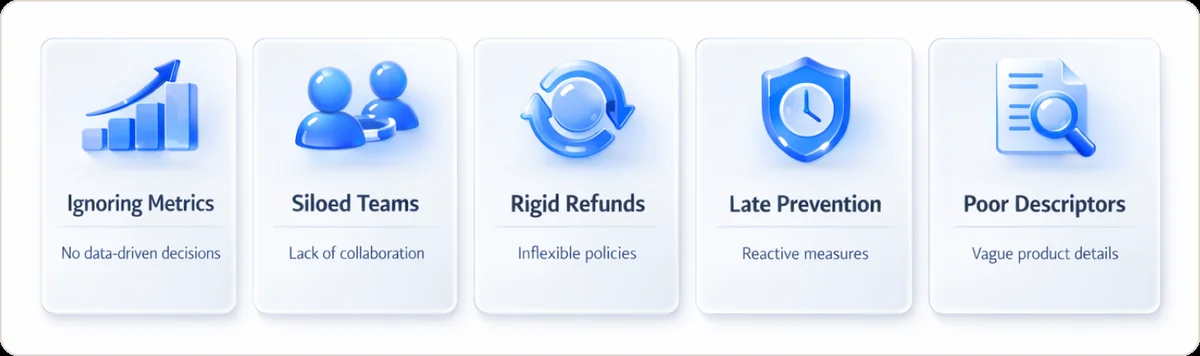
Ignoring your metrics until Visa calls
By then, you're already flagged. Track your combined fraud and chargeback rates weekly, not monthly.
Treating fraud and chargebacks as separate problems
VAMP combines them. Your fraud team and customer service team need shared dashboards and coordinated responses.
Rigid refund policies
Making cancellations difficult backfires. Customers who can't cancel easily file chargebacks instead. For every $1 of fraud or disputed charge, you lose $4.61 in total costs.
Waiting to implement prevention tools
Services like Verifi and Ethoca alerts can stop disputes before they count. If you would rather access those alerts through a single dashboard, see how Beast Insights compares to Chargeblast. Enroll before you're flagged, not after.
Using confusing billing descriptors
When customers don't recognize a charge, they dispute it. Your descriptor should include your brand name, website, and phone number.
The Under-the-Radar Gameplan
Staying compliant requires more than fixing problems after they appear. Use this decision framework to stay ahead of VAMP thresholds.
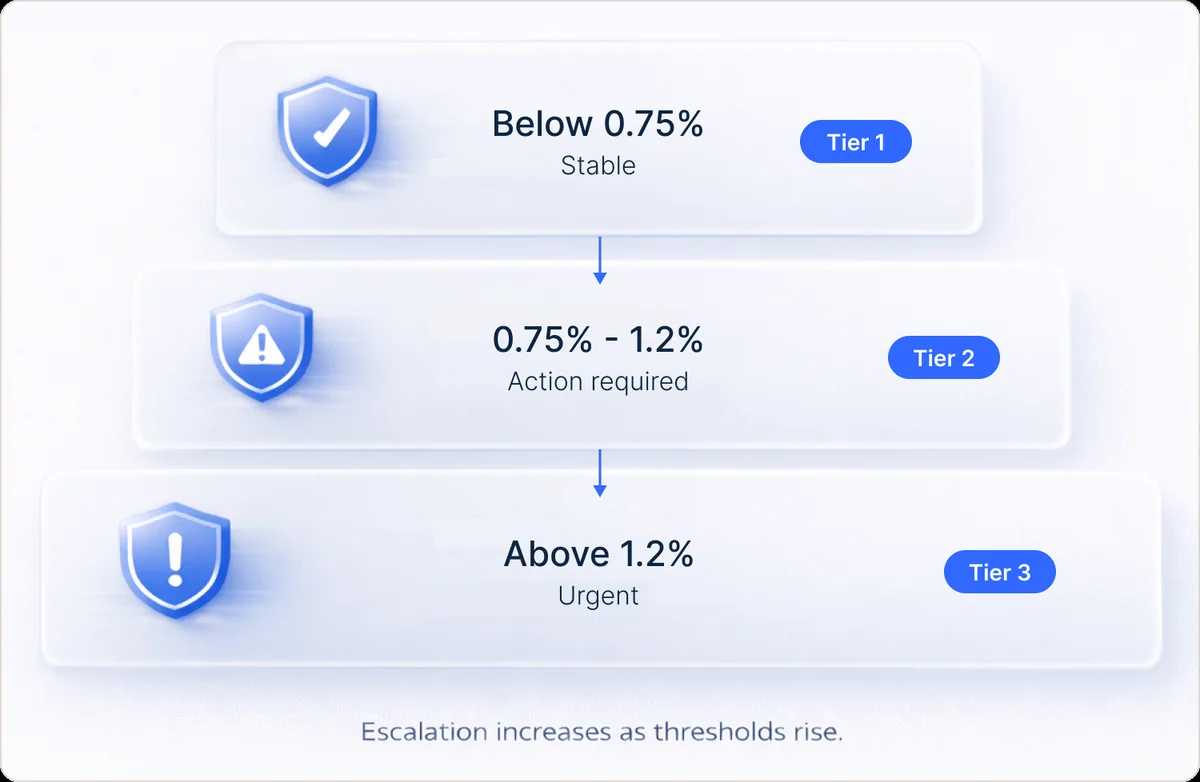
Tier 1: Green Zone (Below 0.75%)
You're safe. Focus on maintaining current practices. Review metrics monthly.
Tier 2: Yellow Zone (0.75% - 1.2%)
Action required. Implement these within 30 days:
- Enroll in Verifi CDRN and Ethoca alerts
- Audit billing descriptors for clarity
- Add pre-renewal email reminders for subscriptions
- Review and simplify cancellation flow
Tier 3: Red Zone (Above 1.2%)
Urgent intervention. Your acquirer is likely already concerned.
- Activate Rapid Dispute Resolution (RDR) for automatic refunds on specific dispute types
- Pause high-risk acquisition channels until the ratio stabilizes
- Consider routing volume across multiple MIDs to distribute risk
- Schedule weekly calls with your acquirer to demonstrate remediation
For related risk mitigation, see What Is Payment Routing?
Implementation Checklist
Monitor your ratios weekly
Calculate your VAMP ratio before Visa does. Set internal alerts at 0.75%—not the threshold, but your safety buffer. Some dispute platforms now ship a VAMP calculator you feed your monthly Visa totals into, which is better than nothing but still a manual monthly exercise; Beast Insights vs Kount compares that approach against continuous per-MID exposure. For a wider view of which dispute platforms surface VAMP ratios at all, see the roundup of Kount alternatives.
Investigate spikes immediately
An unusual uptick in one week can push your monthly ratio over the threshold. Identify root cause within 48 hours.
Enable fraud prevention tools
Address verification, CVV checks, and 3-D Secure block fraud before it hits. These transactions never enter your VAMP calculation.
Fix billing descriptor confusion
Include your website name and phone number. Customers should recognize the charge instantly.
Enroll in alert programs
Verifi and Ethoca notify you when disputes are filed. Resolving early keeps them off your VAMP record. Learn more about stopping disputes before chargebacks.
Use Rapid Dispute Resolution
Auto-refunding certain disputes prevents them from counting against your ratio. Yes, you lose the sale. No, you don't lose your merchant account.
Send subscription reminders
Email customers 3-7 days before renewals. Reduce surprise charges that lead to disputes.
Make cancellation easy
One-click cancellation in the customer portal. A difficult process drives chargebacks.
Empower your support team
Authorize them to issue refunds quickly. A $50 refund costs far less than the $169 average chargeback.
Tracking these metrics across multiple gateways and processors gets complicated fast. Beast Insights connects your payment data into a single view, showing your real-time VAMP exposure across every MID. You see which products, channels, or customer segments drive the most risk—and act before thresholds become violations.
The Bottom Line
VAMP enforcement is here. Thresholds tighten further in April 2026.
Subscription merchants face the highest exposure because recurring billing naturally generates more disputes. But the ROI of compliance is clear: merchants who maintain ratios below 0.5% see higher approval rates from issuers, lower processing costs, and stronger acquirer relationships.
Prevention costs less than penalties. Transparent billing, easy cancellations, and fast support resolve most issues before they escalate.
Monitor your metrics. Fix problems early. Stay under Visa's radar.
Frequently Asked Questions
What is VAMP in Visa?
VAMP stands for Visa Acquirer Monitoring Program. It's Visa's compliance system that tracks merchant chargeback and fraud rates together as a single ratio.
How do I calculate my VAMP ratio?
Add your fraud cases (TC40 reports) plus your chargebacks (TC15), then divide by your total card-not-present transactions. Only merchants with 1,500+ monthly transactions are evaluated.
What happens if my business exceeds VAMP thresholds?
Visa issues an advisory first. After the grace period, you face $8 fines per dispute. Continued violations can lead to account termination.
How is VAMP different from VDMP and VFMP?
VDMP tracked chargebacks separately. VFMP tracked fraud separately. VAMP combines both into one ratio—meaning fraud disputes effectively count twice against you.
What is a safe chargeback rate under VAMP?
Aim for under 0.9%. While Visa's threshold starts at 2.2% and drops to 1.5%, your acquirer will pressure you to stay much lower to protect their own ratios.
Does VAMP apply to small businesses?
Visa evaluates merchants with at least 1,500 monthly transactions. Below that, you're outside Visa's direct scope—but acquirers may still enforce their own limits.
How can I lower my VAMP ratio?
The Visa Acquirer Monitoring Program (VAMP) counts events, not dollars. So find where your fraud reports and disputes come from. Beast Insights splits your declines and disputes by decline code, issuer, acquirer, card brand, billing cycle and MID. A MID is the merchant ID your volume runs under. Fix the worst MID first. That moves the ratio faster than tightening checkout for every customer.
Does VAMP affect my approval rates?
Yes. Approval rates soften before any formal notice arrives. Acquirers and issuers price the risk they see. Volume on a flagged merchant ID (MID) gets approved less often. Beast Insights reports approval rate and chargeback percentage for each MID. Those two numbers show whether one account carries the pressure.